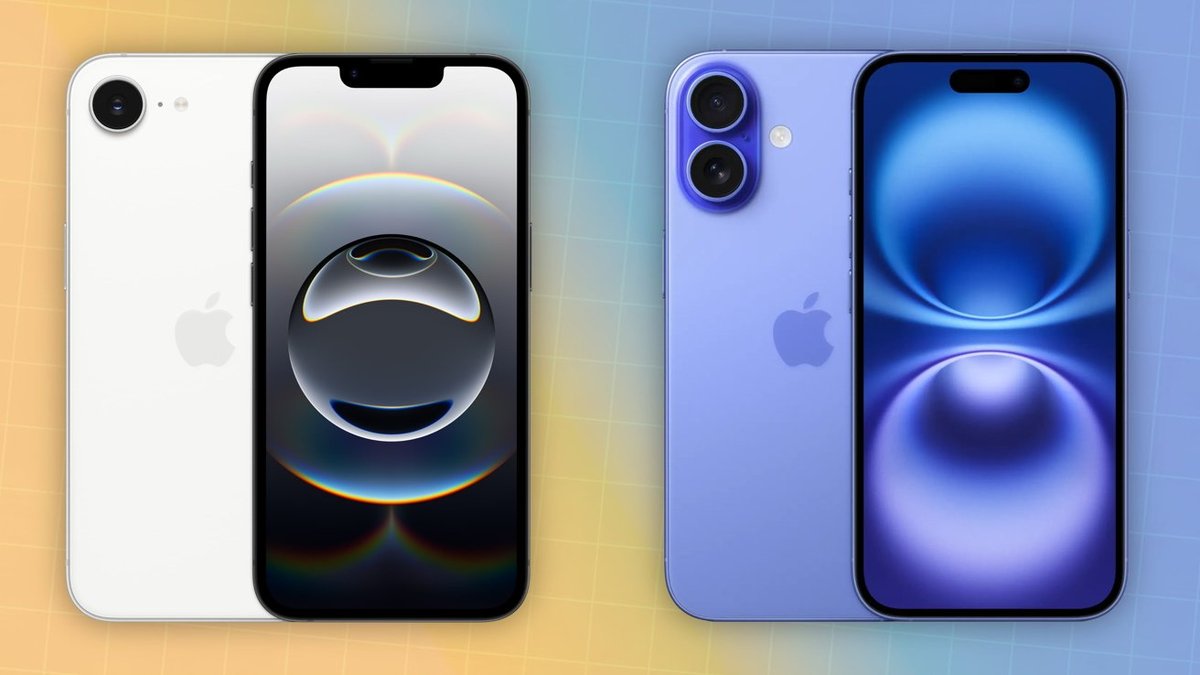
Considering the new iPhone 16e and wondering if it's the right move to upgrade from your current device? You're not alone. When Apple dropped the iPhone 16e on February 28, it effectively ushered out the beloved (and budget-friendly) iPhone SE series, sparking a fresh debate: at $599, does this new "e" model carve out a compelling niche, or is it just another device in an already crowded lineup? We’re diving deep to see how it stacks up against its predecessors and the more expensive iPhone 16, helping you decide if this particular upgrade is truly worth your hard-earned cash.
At a Glance: The iPhone 16e's Core Appeal
Before we unravel all the details, here’s a quick snapshot of what the iPhone 16e brings to the table and who it’s best suited for:
- Modern Design: Say goodbye to thick bezels and Touch ID. The 16e embraces Face ID, an aluminum frame, flat bezels, and the much-awaited USB-C port, bringing it in line with Apple’s contemporary aesthetic.
- Stunning OLED Display: A significant leap from the iPhone SE 2022's LCD, the 6.1-inch OLED screen offers vibrant colors and impressive brightness.
- Powerful A18 Chip: Shares the same advanced chip as the pricier iPhone 16, ensuring top-tier performance for everyday tasks and most gaming.
- Exceptional Camera: A single 48MP main camera delivers fantastic photos, including optical-like 2x zoom and impressive low-light performance that rivals the iPhone 16.
- Full Apple Intelligence Access: Critically, the 16e isn't cut off from Apple's new suite of AI features, offering Writing Tools, Image Playground, and enhanced Siri, among others.
- Improved Battery Life: Offers slightly better endurance than the standard iPhone 16.
- Key Trade-offs: Lacks MagSafe, Dynamic Island, an ultrawide camera, and advanced video modes (Cinematic/Action Mode) found on the iPhone 16.
The iPhone 16e isn't just an incremental update; it’s Apple’s clear statement on what a "budget-friendly" iPhone means in the modern era. While it's $170 more than the old iPhone SE 2022, it also shaves $200 off the price of the standard iPhone 16, placing it in a unique position.
What's in a Name? Understanding the iPhone 16e
The "e" in iPhone 16e is a fresh designation, and it marks a pivotal shift in Apple's strategy. By releasing it on February 28, Apple effectively retired the iPhone SE series, which had long been characterized by its classic iPhone designs and Touch ID. The 16e isn't a successor in design, but rather in its role as a more accessible entry point to the modern iPhone experience.
At $599 for the 128GB base model, the iPhone 16e slots neatly into Apple’s current lineup, sitting below the $799 iPhone 16, the $999 iPhone 16 Pro, and the flagship $1,199 iPhone 16 Pro Max. You can also opt for 256GB ($699) or 512GB ($899) capacities, available in classic black and white finishes.
This pricing strategy positions the 16e not as a "value phone" in the traditional sense – it's still a premium device – but as a way to get the core modern iPhone features without stretching your budget for the full iPhone 16 experience. It aims to offer a compelling blend of design, performance, and camera quality, making the trade-offs intentional rather than accidental.
Design & Display: A Leap Towards Modernity
If you're coming from an older iPhone, especially an SE model, the iPhone 16e's design will feel like a breath of fresh air.
The Modern Look and Feel
The iPhone 16e sports the modern, industrial aesthetic introduced with the iPhone 12. Think flat bezels, rounded corners, and a durable aluminum frame. It’s a design language that feels current and premium, a far cry from the rounded edges and prominent bezels of the iPhone SE 2022 and older models like the iPhone 8 or even the iPhone 11.
One of the most significant changes is the adoption of Face ID, which means the physical Home button and Touch ID are gone. This allows for a much larger, edge-to-edge screen experience. It also boasts an IP68 rating, meaning it's highly resistant to dust and water – a reassuring feature for everyday spills and splashes.
Crucially, the iPhone 16e embraces the USB-C port, finally moving away from Apple's proprietary Lightning connector. This means you can use one charger for your iPhone, iPad, and MacBook, simplifying your tech life. Another welcome addition is the Action button, a customizable physical button that can be programmed to launch your camera, a voice memo, visual intelligence, or any number of shortcuts. It’s a small but powerful feature that adds a layer of convenience.
Compared to the standard iPhone 16, the 16e is slightly shorter and lighter, making it a touch more comfortable for some users to handle. However, it does lack the iPhone 16's more advanced Camera Control button and features a wider notch instead of the Dynamic Island, which integrates alerts and background activities into a more fluid interface.
The Brilliant OLED Display
Perhaps the most impactful upgrade for users moving from an iPhone SE 2022 (or older LCD-based iPhones) is the 6.1-inch OLED display. The iPhone SE 2022’s LCD display was a decent panel, but the 16e's OLED is in a different league entirely.
OLED technology means deeper blacks, higher contrast, and more vibrant colors. Text is sharper, images pop, and videos look far more engaging. More than just pretty colors, the 16e’s display also gets incredibly bright, reaching a peak brightness of 1,028 nits. To put that in perspective, the iPhone SE 2022 topped out at 596 nits. This means better visibility outdoors in bright sunlight and a more immersive viewing experience in any lighting condition.
While it’s a stunning display, it operates at a standard 60Hz refresh rate. This is perfectly fine for most users, but it means you won’t get the butter-smooth scrolling and animation experience of the iPhone Pro models' ProMotion displays (which offer up to 120Hz). For many, this is a minor trade-off for the overall visual upgrade.
Camera Capabilities: Punching Above Its Weight
The camera system on the iPhone 16e is one of its strongest selling points, especially for a device at this price point. Apple has packed some serious imaging prowess here, making it a compelling upgrade for photography enthusiasts on a budget.
The Main Event: 48MP Fusion Camera
The iPhone 16e features a single 48MP fusion rear camera. This isn't just a bump in megapixels; it leverages Apple's computational photography to deliver impressive results. It's marketed for 2x zoom with optical-like quality, which means you can crop into your photos without a noticeable loss of detail, giving you more flexibility in framing your shots.
Compared to the iPhone SE 2022, the 16e's camera offers superior dynamic range, exposure, and richer colors. Photos look more lifelike, with better detail in both highlights and shadows. Even against competitors like the Pixel 8a, the 16e holds its own, outperforming it in dynamic range, 2x zoom detail, and especially in low-light performance. In fact, its low-light photography matches the iPhone 16, which is a remarkable achievement for a device that costs $200 less.
For selfie lovers, the 12MP front-facing camera is identical to the iPhone 16, ensuring sharp, detailed self-portraits and clear video calls.
Video Recording: Cinematic Potential
When it comes to video, the iPhone 16e is equally capable, mirroring the iPhone 16's impressive specifications. It supports 4K video recording at 60 frames per second (fps), allowing for incredibly sharp and fluid footage. For those who love slow-motion, it can capture 1080p video at 240fps, perfect for dramatic slo-mo effects. The Audio Mix feature also enhances sound quality in videos, making your recordings even more professional.
However, the iPhone 16e does have some limitations compared to its more expensive sibling. It lacks an ultrawide camera, meaning you won’t be able to capture those expansive landscape shots or fit more into your frame without stepping back. It also misses out on advanced video modes like Cinematic Mode (which creates a shallow depth of field effect) and Action Mode (for super-stabilized handheld footage) found on the iPhone 16. For most casual users, these omissions won't be dealbreakers, but for aspiring videographers, they might be missed.
Performance & Power: A Chip Off the New Block
Under the hood, the iPhone 16e is anything but a budget device. Apple has equipped it with its latest processor, ensuring a smooth and powerful user experience.
The A18 Chip: Speed and Efficiency
The iPhone 16e is powered by the A18 chip, the very same silicon found in the iPhone 16 and iPhone 16 Plus. This is a huge advantage, as it means you’re getting flagship-level performance at a mid-range price point. The 6-core CPU delivers identical performance to the iPhone 16, scoring an impressive 3,328 in single-core and 8,132 in multi-core tests on Geekbench.
What does this mean for you? It means the iPhone 16e will handle everything you throw at it with ease. Apps launch instantly, multitasking is seamless, and demanding games run smoothly. You won't experience any noticeable slowdowns in day-to-day use, and the phone is well-equipped for future software updates and more intensive applications.
Graphics Performance and Connectivity
While the CPU is identical to the iPhone 16, the 16e features a 4-core GPU compared to the iPhone 16's 5-core GPU. In benchmarks like 3DMark Wild Life Original Unlimited, the 16e scored an average of 71.27 fps, slightly less than the iPhone 16’s 98.23 fps. However, Tom's Guide's assessment notes that this difference does not significantly impact real-world gaming. Unless you're a hardcore mobile gamer scrutinizing every frame, you likely won't notice the difference.
The iPhone 16e is also notable for being the first Apple device to feature the in-house C1 modem. This bodes well for improved cellular connectivity and efficiency, though real-world impacts will vary based on carrier and location.
Battery Life & Charging: Keeping You Going
Battery life is a critical factor for any smartphone, and the iPhone 16e delivers solid endurance, especially given its compact size.
According to Tom's Guide benchmark tests, the iPhone 16e achieved an impressive 12 hours and 41 minutes of battery life. This isn't just good; it actually slightly outperforms the standard iPhone 16, which clocked in at 12 hours and 13 minutes. This means you can comfortably get through a full day of moderate to heavy use without needing to hunt for a charger.
When it's time to top up, the move to USB-C charging is a welcome change. Charging speeds are similar to the iPhone 16, reaching 32% in 15 minutes and 57% in 30 minutes with a compatible fast charger (sold separately, of course).
One notable omission, however, is MagSafe support. While the iPhone 16e supports standard Qi wireless charging at 7.5W, it lacks Apple's magnetic MagSafe system for faster wireless charging and attachment of accessories like wallets and stands. This also impacts the phone’s ability to use StandBy Mode effectively, which relies on MagSafe to turn your iPhone into a smart display when charging horizontally. For some, MagSafe is a "nice-to-have," but for those heavily invested in the MagSafe ecosystem, this will be a significant trade-off.
Software & Smart Features: The AI Advantage
Running on iOS 18.3, the iPhone 16e offers a full, uncompromised software experience, including access to Apple's latest and most advanced features.
Full Apple Intelligence Access
This is perhaps the biggest strategic win for the iPhone 16e. Apple has made it clear that its new Apple Intelligence features are not restricted by the device's price point. This means iPhone 16e users get the complete suite of AI tools, including:
- Writing Tools: Generative AI capabilities to help you draft, proofread, and summarize text across various apps.
- Notification Summaries: AI-powered digests of your most important notifications, helping you stay on top of things without being overwhelmed.
- Image Playground: Create fun, personalized images and emojis.
- Genmoji: Generate custom emojis on the fly.
- Photo Clean Up: Smart tools to remove unwanted objects from your photos.
- Visual Intelligence: Enhanced image recognition and understanding.
- Enhanced Siri: A more natural, capable, and context-aware Siri.
- ChatGPT Integration: Seamless access to OpenAI's powerful language model directly from your iPhone.
Having access to these cutting-edge AI features is a significant advantage, ensuring the 16e feels modern and future-proof.
Action Button and Missing Features
The customizable Action Button is a great addition, allowing you to quickly launch your favorite app or feature – such as Visual Intelligence for quick object recognition. It adds a layer of personalization and efficiency that many users will appreciate.
However, as mentioned, the iPhone 16e does lack the Dynamic Island and MagSafe support. While the Dynamic Island is primarily a visual flourish and a clever way to integrate the camera cutout, MagSafe's absence is more functional, impacting wireless charging speeds and accessory compatibility. The inability to fully leverage StandBy Mode due to the lack of MagSafe is a minor inconvenience for some, but for others, it might be a missed opportunity to turn their device into a useful bedside clock or smart display.
iPhone 16e vs. Previous Models: The Upgrade Decision
Now for the crucial question: is the iPhone 16e a worthy upgrade from your current device? Let's break it down by comparing it to specific previous models.
iPhone 16e vs. iPhone SE (2022): The Obvious Choice
If you own an iPhone SE 2022 (or an even older SE, iPhone 8, or similar), the iPhone 16e represents a massive and unequivocal upgrade.
Here's why:
- Design: You're jumping from a retro design with a Home button and thick bezels to a modern, edge-to-edge display with Face ID, flat edges, and an IP68 rating.
- Display: The shift from a small, less vibrant LCD to a large, bright, and colorful 6.1-inch OLED is transformative.
- Camera: The 48MP main camera with 2x zoom and excellent low-light performance utterly dwarfs the SE 2022’s single 12MP camera.
- Performance: The A18 chip is generations ahead of the SE 2022's A15, offering vastly superior speed and efficiency.
- Charging: Moving to the universal USB-C port is a major convenience.
- Smart Features: Full access to Apple Intelligence, the Action button, and advanced safety features are simply not present on the SE 2022.
The $170 price difference ($599 vs. $429) is easily justified by the sheer number of significant improvements. If you're coming from an iPhone SE 2022, the iPhone 16e is the upgrade to consider.
iPhone 16e vs. iPhone 13: A Nuanced Decision
For iPhone 13 users, the decision becomes more nuanced. The iPhone 13 is still a very capable phone, and whether to upgrade depends heavily on your priorities.
Key Improvements of iPhone 16e over iPhone 13:
- Better Camera: The iPhone 16e offers a superior 48MP main camera with improved 2x optical-like zoom and significantly better low-light performance. The iPhone 13 has a 12MP main camera.
- Extended Battery Life: The 16e boasts a slightly longer battery life (12h 41m vs. iPhone 13's typical 10-11 hours).
- AI-Powered Apple Intelligence: This is a major differentiator. If you want access to Writing Tools, Image Playground, Genmoji, and enhanced Siri, the 16e has it, and the iPhone 13 does not.
- USB-C Charging: A move from the Lightning port to the more universal USB-C.
- Action Button: A customizable physical button for quick access to functions.
- Advanced Safety Features: Including Emergency SOS via Satellite.
- Performance: While the A18 chip is newer and faster than the A15 in the iPhone 13, the iPhone 13 is still very fast for most daily tasks. The difference might not be noticeable in everyday use unless you run very demanding applications.
Reasons to Keep Your iPhone 13: - Ultrawide Camera: The iPhone 13 has a versatile ultrawide camera, which the iPhone 16e lacks. If you frequently use this lens for expansive shots, keeping your 13 makes sense.
- Adequate Performance: If your current iPhone 13 still feels fast enough for your needs, and you don't encounter performance bottlenecks, there's no immediate need to upgrade on that front.
- No Need for Apple Intelligence or Action Button: If these new AI features or the customizable button don't excite you, and you're happy with your current software experience, then the 16e loses some of its shine.
- Cost Savings: The iPhone 13 is still a great phone, and holding onto it means saving the cost of a new device.
Ultimately, if camera quality, cutting-edge AI, USB-C, and longer battery life are your top priorities, the iPhone 16e is a compelling upgrade. If you value the ultrawide camera, and your iPhone 13 still performs to your satisfaction, you might be better off sticking with what you have.
iPhone 16e vs. iPhone 16: The $200 Question
This is where the decision becomes genuinely challenging. The iPhone 16e is $200 less than the iPhone 16 ($599 vs. $799), but for that extra cash, you get a few key advantages.
What the iPhone 16 offers for $200 more:
- Dynamic Island: A more elegant and functional notch replacement that integrates alerts and live activities.
- MagSafe Support: Faster wireless charging, magnetic accessory compatibility, and full functionality with StandBy Mode.
- Ultrawide Camera: The iPhone 16 includes a versatile ultrawide lens in addition to its main camera.
- More Advanced Video Features: Cinematic Mode and Action Mode, offering more creative control for video recording.
- Slightly Stronger GPU: While not significantly impacting real-world gaming, the 5-core GPU is technically more powerful.
Why choose the iPhone 16e over the iPhone 16: - Cost Savings: You save $200, which can be significant.
- Identical Core Performance: Both share the same A18 chip and 6-core CPU, meaning everyday speed and responsiveness are identical.
- Identical Main Camera & Low-Light: The primary camera experience is effectively the same, including excellent low-light performance.
- Full Apple Intelligence Access: You don't miss out on any of the AI features.
- Better Battery Life: The 16e actually lasts slightly longer on a charge.
The iPhone 16e is an excellent choice for budget-conscious users who are willing to forgo the Dynamic Island, MagSafe, an ultrawide camera, and advanced video modes. If you primarily care about raw performance, a great main camera, a modern design, and full access to Apple's AI, the 16e delivers all that for a lower price. It's a testament to how good the 16e is that the decision between it and the standard 16 comes down to these specific, often niche, features.
Who is the iPhone 16e For? Making Your Decision
The iPhone 16e slots into a very specific and appealing place in Apple's ecosystem. It's not the cheapest iPhone, nor is it the most feature-packed. Instead, it offers a sweet spot for those who want a truly modern iPhone experience without paying flagship prices.
Upgrade If You:
- Own an iPhone SE 2022 (or older): This is a no-brainer. The 16e offers dramatic improvements in design, display, camera, and performance, making it a highly worthwhile upgrade.
- Are on an older iPhone (e.g., iPhone X, XS, 11, 12) and want a fresh feel: You'll appreciate the camera improvements, USB-C, Action button, and the latest A18 chip. The OLED display might already be familiar, but the brightness and overall experience will be enhanced.
- Prioritize a great main camera and battery life: The 16e's 48MP camera and excellent battery life are standout features.
- Want full access to Apple Intelligence: This is a key selling point that puts the 16e on par with its more expensive siblings in terms of future-proofing and smart features.
- Are budget-conscious but don't want to compromise on core performance or the main camera: You're happy to skip the Dynamic Island, MagSafe, and ultrawide camera to save $200.
- Are tired of the Lightning port: USB-C is finally here for the non-Pro models, and it's a game-changer for many.
Stick With Your Current Phone If You:
- Have an iPhone 13 or 14 and rely heavily on the ultrawide camera: The 16e lacks this lens, which might be a dealbreaker if it's part of your regular photography workflow.
- Are heavily invested in the MagSafe ecosystem: The absence of MagSafe on the 16e means slower wireless charging and incompatibility with MagSafe accessories.
- Can't live without the Dynamic Island or advanced video modes (Cinematic/Action Mode): These are exclusive to the standard iPhone 16 and Pro models.
- Find your current iPhone (especially an iPhone 13 or 14) performs perfectly fine for your needs: The generational leaps in performance aren't always immediately noticeable for everyday tasks.
- Are on an iPhone Pro model: If you're coming from an iPhone 13 Pro or 14 Pro, the 16e will feel like a downgrade in terms of screen refresh rate (60Hz vs. 120Hz), camera versatility (no telephoto, no ProRes video), and MagSafe.
Frequently Asked Questions About the iPhone 16e
Is the iPhone 16e replacing the iPhone SE?
Yes, effectively. The iPhone 16e was released on February 28, effectively retiring the iPhone SE series. It takes on the role of providing a modern iPhone experience at a more accessible price point.
Does the iPhone 16e have 5G?
Yes, the iPhone 16e features Apple's new in-house C1 modem, which supports 5G connectivity for faster download and upload speeds.
Can the iPhone 16e use MagSafe accessories?
No, the iPhone 16e does not support MagSafe. It can use standard Qi wireless chargers at 7.5W, but it lacks the magnetic alignment and faster charging capabilities of MagSafe.
Does the iPhone 16e have the Dynamic Island?
No, the iPhone 16e has a wider traditional notch at the top of its display, rather than the Dynamic Island found on the iPhone 16 and Pro models.
Is the iPhone 16e camera as good as the iPhone 16?
For the main camera, yes, it's very comparable. The iPhone 16e features a single 48MP fusion rear camera that offers excellent dynamic range, exposure, colors, and 2x optical-like zoom, with low-light performance matching the iPhone 16. However, it lacks the ultrawide camera and some advanced video features found on the iPhone 16.
What is the battery life like on the iPhone 16e?
The iPhone 16e offers impressive battery life, lasting 12 hours and 41 minutes in Tom's Guide benchmark tests, slightly outperforming the standard iPhone 16.
The Final Word: Is the iPhone 16e a Worthy Upgrade?
The iPhone 16e isn't just a new model; it's a clear signal from Apple about the future of its more accessible devices. It brings a truly modern design, a brilliant OLED display, flagship-level performance from the A18 chip, an outstanding main camera, and – crucially – full access to Apple Intelligence, all for a starting price of $599.
For users clinging to an iPhone SE 2022 or an older iPhone 8, X, XS, or 11, the iPhone 16e is a resounding "yes." It's a dramatic leap forward in almost every conceivable way, making it an incredibly worthy upgrade that will feel current and powerful for years to come.
If you're weighing it against an iPhone 13 or 14, the decision becomes more personal. Do you prioritize the ultrawide camera, MagSafe, or the Dynamic Island? If so, the standard iPhone 16 might be worth the extra $200. However, if you value a fantastic main camera, top-tier performance, excellent battery life, the shift to USB-C, and all of Apple's new AI features, and you're happy to forgo those specific bells and whistles, then the iPhone 16e offers incredible value.
Ultimately, the iPhone 16e isn't a "value phone" in the sense of being cheap, but it offers a tremendous amount of "value" in terms of features per dollar. It delivers a comprehensive and future-proof iPhone experience that is genuinely compelling. If you're looking for a significant upgrade without the Pro-level price tag, the iPhone 16e stands tall as a formidable contender. For a deeper dive into whether this specific model aligns with your unique needs, you might want to explore more about Should you buy the iPhone 16e?.